
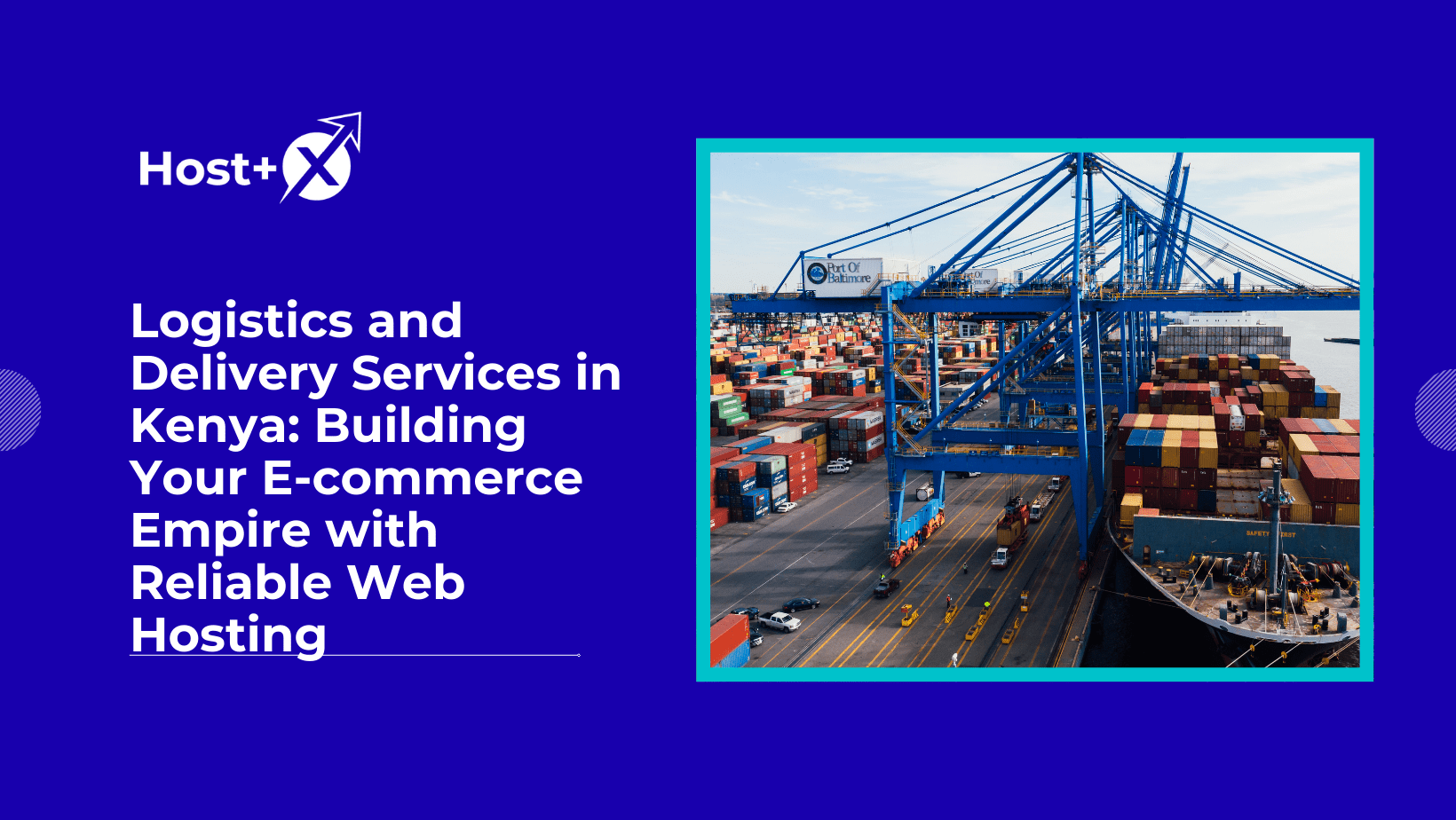
Logistics and Delivery Services in Kenya: Building Your E-commerce Empire with Reliable Web Hosting
The streets of Nairobi, Mombasa, and Kisumu are witnessing a transformation that would have seemed impossible just a decade ago. Motorcycles adorned with bright delivery bags weave through traffic, carrying everything from hot meals to electronics. Vans bearing the logos of logistics startups make their rounds through residential estates, delivering online purchases that Kenyans increasingly prefer over traditional shopping trips. This isn’t a temporary trend—it’s a fundamental shift in how commerce operates in Kenya, and it’s creating unprecedented opportunities for entrepreneurs in the logistics and delivery sector.
E-commerce growth in Kenya has been nothing short of explosive. From humble beginnings where online shopping was viewed with skepticism and suspicion, we’ve evolved into a market where consumers confidently order products online, expecting fast, reliable delivery to their doorstep. This transformation has been accelerated by several factors: widespread smartphone adoption, improved internet connectivity, the ubiquity of mobile money platforms like M-Pesa, and most recently, the COVID-19 pandemic that forced even reluctant consumers to embrace digital shopping. The result is a delivery boom that’s creating wealth for logistics entrepreneurs who can effectively meet this surging demand.
However, success in the modern logistics and delivery industry isn’t just about having vehicles and riders. It’s equally about having the digital infrastructure that allows customers to place orders, track shipments in real-time, communicate with delivery personnel, and trust that their payment information is secure. Whether you’re launching a last-mile delivery startup in Nairobi, building a nationwide courier service, or creating a specialized logistics platform for businesses, your digital presence is just as critical as your physical fleet. This is where strategic investments in professional web hosting, secure domain registration, and comprehensive web development become essential tools for competitive advantage.
The E-commerce Explosion: Understanding Kenya’s Delivery Boom
Kenya’s e-commerce market has grown at an average annual rate exceeding 20% over the past five years, with projections suggesting this trajectory will continue throughout the next decade. While exact figures vary depending on methodology, conservative estimates place Kenya’s e-commerce market value at over $1 billion annually, with significant room for expansion given that only a small fraction of total retail transactions currently occur online. This growth is distributed across various sectors—fashion and electronics lead in terms of transaction value, while food delivery has emerged as the highest-frequency category, with some consumers ordering meals online multiple times weekly.
The demographics driving this growth are particularly important for logistics entrepreneurs to understand. Kenya’s large youth population, comfortable with technology and increasingly employed in the formal sector, represents the core e-commerce consumer base. However, adoption is rapidly expanding beyond this demographic. Middle-aged professionals appreciate the convenience of home delivery for household essentials, while even older Kenyans are discovering that online shopping with delivery offers solutions to mobility challenges and time constraints. Geographically, while Nairobi remains the undisputed e-commerce capital, secondary cities like Mombasa, Kisumu, Nakuru, and Eldoret are experiencing rapid growth, creating opportunities for regional logistics players.
The types of products being delivered have also diversified remarkably. Early e-commerce in Kenya focused on electronics and fashion—high-value items where online shopping offered significant price advantages over physical retail. Today, the catalog has expanded to include groceries, pharmaceuticals, furniture, books, beauty products, automotive parts, and virtually every product category imaginable. This diversification creates opportunities for specialized logistics providers—cold chain delivery for perishables, secure handling for pharmaceuticals, careful packaging for fragile items, and white-glove service for furniture installation.
Food delivery deserves special attention as the category that introduced many Kenyans to the concept of on-demand delivery. Platforms like Uber Eats, Glovo, and Bolt Food have normalized the idea that you can summon a hot meal to your location within thirty minutes using just your smartphone. This normalization has had spillover effects, making consumers more receptive to delivery services for other product categories. The success of food delivery has also demonstrated the viability of the gig economy model in Kenya, where independent delivery personnel use their own motorcycles or bicycles to fulfill orders, creating flexible income opportunities while keeping overhead low for platform operators.
Business-to-business logistics represents another rapidly expanding segment. As Kenyan businesses increasingly embrace e-commerce for their own operations—ordering supplies online, purchasing inventory from overseas suppliers, or coordinating multi-location operations—the demand for reliable, trackable business logistics has surged. Companies need couriers who can handle sensitive documents, deliver inventory between warehouses and retail locations, manage returns logistics, and provide detailed documentation for accounting and compliance purposes. These B2B logistics services often command premium pricing due to their reliability requirements and specialized handling needs.
Why Logistics Startups Need Professional Web Hosting Solutions
When entrepreneurs think about launching a logistics or delivery business, their minds naturally gravitate toward tangible assets—motorcycles, vans, warehouses, packaging materials, and hiring riders. These physical components are undeniably important, but they represent only half of what modern customers expect from delivery services. The other half is digital: a professional website where customers can request services, a tracking system that provides real-time visibility, automated notifications keeping customers informed, secure payment processing, and a professional online presence that distinguishes legitimate businesses from informal operators.
This digital infrastructure begins with selecting appropriate web hosting in Kenya that can support the specific demands of logistics operations. Unlike a simple informational website that might handle a few dozen visitors daily, a logistics platform deals with dynamic content, database queries, real-time updates, API integrations, and potentially thousands of concurrent users during peak periods. When a customer checks their delivery status or a business client uploads manifests for fifty packages, your hosting infrastructure must handle these requests instantly, without lag or errors that undermine confidence in your service reliability.
Consider the customer journey for modern delivery services. A small business owner in Westlands needs to ship products to customers across Kenya. They visit your logistics company’s website—if it loads slowly, displays error messages, or appears unprofessional, they immediately question whether you can reliably handle their physical deliveries. They register an account, upload delivery details for multiple packages, make payment through integrated payment gateways, and receive confirmation emails—each of these interactions depends on robust hosting infrastructure. Throughout the day, both the business owner and their customers track package progress through your platform—this real-time tracking functionality requires hosting that can handle frequent database queries and provide consistent performance.
The best hosting company in Kenya for logistics startups understands these unique requirements and provides infrastructure optimized for high-transaction, database-intensive applications. This includes adequate processing power to handle complex logistics algorithms, sufficient bandwidth for peak-period traffic, database management systems that maintain performance under load, and server configurations that minimize latency for real-time tracking features. These technical specifications might seem abstract, but they directly impact customer satisfaction—a tracking system that takes ten seconds to load will frustrate customers, while instant updates build confidence in your operational capabilities.
Security considerations become paramount when handling customer data, payment information, and business client information. Logistics platforms store addresses (revealing where people live and work), phone numbers, payment details, delivery preferences, and purchasing patterns. This data is valuable to criminals for various malicious purposes, making logistics websites attractive targets for cyberattacks. Proper hosting infrastructure includes firewalls, intrusion detection, DDoS protection, regular security patches, and backup systems ensuring business continuity even if systems are compromised. A security breach doesn’t just damage your reputation—it can expose you to legal liability and destroy the trust that’s essential for customer retention.
HostPlusX has designed our shared hosting services with the specific needs of logistics and delivery businesses in mind. We understand that uptime isn’t just a technical metric for your business—it’s the difference between fulfilling deliveries on schedule and losing customers to competitors. Our infrastructure provides the reliability, security, and performance that modern logistics operations demand.
Establishing Your Logistics Brand: Domain Registration for Delivery Services
Before you can launch your logistics platform, you need a memorable, professional domain name that communicates reliability, speed, and trustworthiness—the core values customers seek in delivery services. Your domain name is more than a technical necessity; it’s a critical branding decision that influences customer perception, memorability, and search engine visibility. In the competitive logistics sector where trust and recognition are essential, the right domain can provide significant competitive advantage.
Domain registration Kenya services have become increasingly sophisticated, offering logistics entrepreneurs various options for establishing their online identity. The choice between .co.ke (Kenyan country code), .com (international standard), .delivery (industry-specific), or other extensions should align with your business strategy and target market. Local logistics companies focusing on domestic deliveries often benefit from .co.ke domains, which signal local presence and often rank better in Kenyan search results. Companies with regional ambitions or targeting international clients might prefer .com domains for their universal recognition and credibility.
When selecting a domain name for your logistics business, several considerations come into play. Ideally, your domain should be short, easy to spell, easy to remember, and ideally incorporate keywords that customers might search for. Names like “SwiftDeliveryKenya.co.ke” or “NairobiCouriers.com” immediately communicate what you do and where you operate. However, in a crowded market, many obvious domain names are already registered, requiring creativity. Some successful logistics companies have created portmanteau words, used location-specific nicknames, or incorporated words suggesting speed and reliability in Swahili or other local languages.
The process of domain registration should be straightforward, transparent, and provide full ownership rights. You need a registrar who offers clear pricing without hidden renewal fees, provides complete control over DNS settings for configuring email and subdomains, includes WHOIS privacy protection to shield your personal information from public directories, and offers responsive support when technical issues arise. For logistics companies, email configuration is particularly important—professional email addresses using your domain (@yourcompany.co.ke) are essential for business communications with clients, while generic email addresses undermine professionalism.
Many logistics startups also benefit from registering multiple domain variations to protect their brand and capture traffic from common misspellings or alternative search terms. If you register “FastCouriersKenya.co.ke,” you might also want to secure the .com version, common misspellings, and alternative phrasing customers might use. This defensive registration prevents competitors from capitalizing on your brand recognition and ensures customers searching for your business end up on your website rather than a competitor’s or, worse, a fraudulent site impersonating your business.
For established logistics companies looking to rebrand, consolidate multiple brands after acquisition, or simply move to a better domain registrar, domain transfer services become critically important. A smooth domain transfer ensures zero downtime for your website, email, tracking systems, and customer portals—all of which are essential for ongoing operations. Poor domain transfer management can result in hours or days of service disruption, causing immediate revenue loss and long-term reputation damage. Working with experienced domain registrars who understand the technical process and can coordinate seamless transfers is essential.
At HostPlusX, our domain registration and transfer services are designed specifically for businesses that cannot tolerate service interruptions. We handle the technical complexities of domain management, ensuring your online presence remains stable and accessible while you focus on picking up and delivering packages. For logistics entrepreneurs looking to buy domain Kenya and establish their brand identity, we provide expert guidance throughout the selection and registration process.
Building Customer Trust: SSL Certificates for Logistics Platforms
In the logistics and delivery industry, trust is currency. Customers are entrusting you with their purchases—sometimes valuable electronics or irreplaceable items—along with their personal information, home addresses, payment details, and delivery preferences. This trust must extend to every touchpoint, including your digital platforms. When customers visit your website to book deliveries, track packages, or make payments, they need absolute confidence that their information is secure. This is where SSL certificates become not just technical requirements but essential trust-building tools.
SSL certificates in Kenya have evolved from optional security features to mandatory requirements for any website handling user data, and this is particularly critical in logistics where financial transactions and sensitive personal information flow constantly. An SSL certificate encrypts data transmitted between your customer’s browser and your server, ensuring that payment information, addresses, phone numbers, and other sensitive details cannot be intercepted by malicious actors during transmission. For logistics platforms processing dozens or hundreds of transactions daily, SSL encryption protects both your customers and your business from fraud and data breaches.
The visible indicators of SSL certificates provide immediate reassurance to customers evaluating whether to use your logistics services. Modern browsers display a padlock icon in the address bar for SSL-secured websites and show the website URL beginning with “https://” rather than “http://”. Conversely, websites without SSL certificates now trigger alarming “Not Secure” warnings that immediately undermine customer confidence. Imagine a potential customer researching delivery services, landing on your website, and seeing a security warning—the likelihood they’ll proceed to book a delivery drops dramatically, regardless of how competitive your pricing might be.
Search engine optimization represents another critical reason logistics companies need SSL certificates. Google has explicitly made SSL encryption a ranking factor in its search algorithm, meaning websites without certificates are penalized in search results. For logistics companies competing for visibility when customers search terms like “courier services Nairobi” or “same-day delivery Kenya,” losing search ranking due to missing SSL certification means losing business to competitors who have implemented proper security. Given that most logistics customers find services through online searches, strong SEO directly impacts customer acquisition costs and business growth.
Payment security deserves special attention for logistics platforms. Many logistics companies collect payments directly through their websites—delivery fees, insurance charges, storage fees, or subscription payments for regular customers. Processing these payments requires PCI DSS compliance, which mandates SSL encryption as a baseline security requirement. Even if you use third-party payment processors like PayPal, Stripe, or M-Pesa integrations, your website still needs SSL certification to ensure the connection to these processors remains secure. Without proper SSL implementation, payment processors may refuse to work with your platform, limiting your ability to accept online payments.
Different SSL certificate types serve different purposes for logistics businesses. A basic Domain Validated (DV) certificate provides encryption and is suitable for small logistics operations with simple websites. However, companies handling significant transaction volumes, operating customer portals with stored payment information, or managing B2B logistics platforms should consider Organization Validated (OV) or Extended Validation (EV) certificates. These higher-level certificates undergo more rigorous verification of your business legitimacy and display your company name in the browser, providing additional trust signals that are particularly valuable when handling business logistics for corporate clients who conduct vendor due diligence.
The implementation and maintenance of SSL certificates can present technical challenges for entrepreneurs focused on logistics rather than web development. Certificates must be properly installed, configured across all website pages and subdomains, renewed before expiration (most last one to two years), and monitored for potential vulnerabilities. Many hosting providers offer free SSL certificates through Let’s Encrypt, which is excellent for basic needs, but premium certificates provide additional benefits like warranty protection, dedicated support, and advanced validation that may be worthwhile for established logistics companies.
HostPlusX provides comprehensive SSL certificate solutions tailored specifically for logistics and delivery businesses. We handle the technical implementation, ensuring your entire platform—booking pages, tracking portals, payment processors, customer accounts—displays proper security indicators and maintains current encryption standards. This allows you to focus on what you do best: getting packages from point A to point B reliably and efficiently.
Affordable Web Hosting That Scales with Your Logistics Growth
One of the most significant challenges facing logistics startups is managing cash flow during the critical early growth phase. You’re investing in vehicles, fuel, insurance, rider salaries, warehouse space, packaging materials, and marketing—all before you’ve established steady revenue streams. In this context, the misconception that professional web infrastructure requires prohibitive investment can lead entrepreneurs to delay or compromise on their digital presence. This is a costly mistake, because in today’s market, customers expect seamless digital experiences regardless of company size.
The reality is that affordable web hosting solutions specifically designed for growing logistics businesses provide all the essential features needed to compete effectively without straining startup budgets. Modern hosting technologies, competitive markets, and economies of scale have made professional web infrastructure more accessible than ever. The key is understanding what “affordable” truly means—it’s not simply choosing the cheapest option, but rather finding optimal value by matching hosting capabilities to your specific operational requirements and growth trajectory.
Hosting for small businesses in the logistics sector requires specific features that budget-conscious entrepreneurs should prioritize. First, adequate bandwidth and processing power to handle multiple concurrent users checking tracking information, especially during peak delivery windows when dozens of customers simultaneously monitor their packages. Second, reliable uptime guarantees (ideally 99.9% or higher), because every minute your website is down represents potential lost customers and current customers unable to track deliveries, leading to anxiety and support calls. Third, scalable resources that can grow as your delivery volume increases without requiring complete platform migration. Fourth, email hosting for professional customer communications and order confirmations. Fifth, one-click installation for popular content management systems and e-commerce platforms that power logistics websites.
Database performance deserves special consideration for logistics platforms. Unlike simple informational websites that display static content, logistics platforms continuously query databases—matching delivery addresses to service areas, calculating pricing based on weight and distance, updating real-time tracking information, retrieving customer order histories, and generating delivery manifests for riders. This database-intensive activity requires hosting with optimized database management systems, sufficient RAM to cache frequently accessed data, and fast storage drives (preferably SSD) that reduce query response times. Compromising on database performance to save a few dollars monthly creates frustrating user experiences that cost far more in lost customers.
Security features must be included even in affordable hosting packages. Your logistics platform handles sensitive customer data and payment information, making it a target for cyberattacks regardless of your company size. Essential security features include firewalls protecting against common web attacks, regular automated backups enabling recovery from data loss or ransomware, malware scanning to detect compromised files, and DDoS protection preventing attacks that overwhelm your server with traffic. Some budget hosting options omit these features or charge extra for them, creating hidden costs that make “cheap” hosting more expensive than advertised.
Email deliverability is an often-overlooked aspect of hosting quality that significantly impacts logistics operations. Your platform sends numerous automated emails—booking confirmations, tracking updates, delivery notifications, invoices, and customer service responses. If these emails end up in spam folders due to poor email server reputation or improper configuration, customers miss critical information about their deliveries, leading to confusion, complaints, and potential lost packages. Quality hosting providers maintain good email server reputations and configure SPF, DKIM, and DMARC records properly, ensuring your logistics communications reach customers reliably.
The scalability of hosting solutions is particularly important for logistics businesses, which often experience rapid, sometimes explosive growth. You might launch with a dozen deliveries daily in one neighborhood, but within months find yourself handling hundreds of deliveries across multiple cities. Your hosting infrastructure must scale to accommodate this growth without requiring platform migration that risks downtime and data loss. Look for hosting providers offering clear upgrade paths, the ability to add resources as needed, and support for eventually moving to dedicated or cloud hosting as your operations expand beyond shared hosting capabilities.
HostPlusX has specifically designed our hosting packages to support logistics startups throughout their growth journey. Our entry-level plans provide all the essential features needed to launch a professional logistics platform, while our flexible upgrade paths ensure your infrastructure scales as your delivery volume grows. We understand that every shilling counts for startups, which is why we’ve structured our pricing to deliver maximum value—professional features, reliable performance, and expert support at prices that work for emerging logistics businesses. Our reliable website hosting ensures your platform remains accessible when customers need it most.
From Simple Tracking to Advanced Logistics: Web Design and Development Services
Having reliable hosting and a professional domain establishes your digital foundation, but what you build on that foundation determines your competitive position in the crowded logistics market. This is where comprehensive web design and development services become critical differentiators. Your website isn’t just a digital brochure—it’s your primary customer acquisition channel, your operations management platform, your customer service portal, and increasingly, your entire business interface.
Logistics websites have unique requirements that generic templates often fail to address adequately. Customers visiting your platform have specific expectations: they want instant rate quotes based on pickup and delivery locations, transparent pricing with no hidden fees, easy booking with minimal form fields, multiple payment options including mobile money, real-time tracking with map visualization, delivery photo confirmation, customer support chat, and seamless mobile experience since most customers book and track deliveries from smartphones. A well-designed logistics platform anticipates these needs and structures user flows accordingly.
The visual design of your logistics website communicates professionalism, reliability, and modernity—qualities customers associate with dependable delivery services. Color psychology plays a role; blues and greens convey trust and reliability, while oranges and reds suggest speed and urgency. High-quality photography showing your actual vehicles, riders, and operations builds authenticity far better than generic stock images. Prominent display of security badges, customer testimonials, and delivery statistics provides social proof that encourages first-time customers to trust your service. Accessibility considerations ensure customers with visual impairments or other disabilities can use your platform effectively.
Functionality separates adequate logistics websites from exceptional ones. Instant rate calculators allow customers to get pricing without contacting your sales team, reducing friction in the decision-making process. Integrated booking systems capture all necessary delivery information in user-friendly forms with address auto-complete, reducing errors from manual entry. Account systems allow regular customers to save delivery addresses, payment methods, and preferences, making repeat bookings quick and easy. Real-time tracking integration provides customers visibility into their delivery status, reducing “where’s my package?” inquiries to customer service. Automated notifications via SMS and email keep customers informed throughout the delivery journey without requiring manual updates from your operations team.
Mobile responsiveness isn’t optional for logistics platforms—it’s absolutely essential. Over 80% of logistics customers in Kenya interact with delivery services primarily through smartphones. They book deliveries while at work, track packages while commuting, and communicate with riders through mobile devices. A logistics website that’s difficult to navigate on a smartphone loses customers immediately to competitors with better mobile experiences. Responsive design ensures your platform automatically adjusts layout, form fields, button sizes, and map visualization to provide optimal experiences across smartphones, tablets, and desktop computers.
Advanced features that distinguish premium logistics platforms include route optimization algorithms that help your riders complete deliveries efficiently, proof-of-delivery systems capturing recipient signatures or photos, API integrations allowing e-commerce websites to embed your delivery options directly in their checkout process, bulk upload functionality for business clients managing large shipment volumes, recurring delivery scheduling for regular customers, rider management dashboards tracking performance and availability, automated invoice generation for business clients, and analytics dashboards providing insights into delivery performance, popular routes, and customer satisfaction.
Integration with third-party systems extends your platform’s capabilities. Payment gateway integration with M-Pesa, PayPal, Stripe, and local banks enables seamless payment collection. SMS gateway integration for delivery notifications and one-time passwords for account security. Mapping APIs from Google Maps or Mapbox for address validation and route visualization. Accounting software integration for automated bookkeeping and financial reporting. CRM integration for managing customer relationships and marketing campaigns. These integrations transform your logistics website from a simple booking tool into a comprehensive business management platform.
Security considerations in logistics web development extend beyond SSL certificates. Your platform architecture should include secure session management preventing unauthorized access to customer accounts, input validation protecting against SQL injection and cross-site scripting attacks, rate limiting preventing automated abuse, secure file upload systems for invoices and delivery manifests, and regular security updates addressing newly discovered vulnerabilities. For logistics platforms handling sensitive business information—pharmaceutical deliveries, legal documents, valuable electronics—security becomes even more critical, with features like encrypted data storage, audit logs tracking who accessed what information, and compliance with data protection regulations.
Many logistics entrepreneurs underestimate the complexity of building effective logistics platforms, assuming they can quickly assemble a website using WordPress plugins or website builders. While these tools can create basic websites, they often lack the specific functionality logistics operations require—sophisticated tracking systems, route optimization, rider management, dynamic pricing—and attempting to cobble together multiple plugins creates performance issues and security vulnerabilities. Professional development by teams understanding both web technology and logistics operations produces platforms that truly serve your business needs.
HostPlusX partners with experienced web designers and developers specializing in logistics and delivery platforms. Whether you need a basic booking website to establish your online presence or a sophisticated platform with real-time tracking, API integrations, and business client portals, we can connect you with professionals who understand both the technical and operational aspects of logistics web development. Our hosting infrastructure is optimized to support these advanced features, ensuring your customer-facing applications and operations management tools perform reliably even during peak demand periods.
Last-Mile Delivery: Digital Solutions for the Final Frontier
Last-mile delivery—the final leg of the journey from distribution center to customer’s doorstep—represents both the most expensive and most critical phase of the logistics chain. It’s where delivery promises are kept or broken, where customer satisfaction is won or lost, and where thin margins are made or destroyed. For logistics companies, optimizing last-mile delivery operations can mean the difference between profitability and failure. Digital solutions play an increasingly central role in this optimization, making robust web infrastructure not just a customer-facing necessity but an operational imperative.
The complexity of last-mile delivery in Kenyan urban centers cannot be overstated. Nairobi’s traffic congestion turns short distances into hour-long journeys during peak periods. Informal addressing systems mean “near the green kiosk past the church” serves as delivery instructions. High-rise apartments lack proper delivery reception systems. Security concerns require verification procedures. Multiple deliveries must be sequenced efficiently to maximize rider productivity. Each of these challenges requires digital solutions—route optimization algorithms, GPS tracking, digital communication systems, and customer verification processes.
Real-time tracking has evolved from luxury feature to customer expectation. Modern consumers, accustomed to watching their Uber approach on a map, expect the same visibility for package deliveries. This requires GPS tracking on delivery vehicles or riders’ smartphones, backend systems processing this location data, and customer-facing interfaces displaying current delivery status on maps. The technical infrastructure supporting real-time tracking is substantial—frequent GPS updates generate significant data traffic, mapping APIs incur usage costs, and ensuring accuracy requires sophisticated algorithms accounting for signal loss in buildings and GPS drift. These features demand hosting infrastructure with adequate bandwidth, processing power, and integration capabilities.
Communication systems bridge the gap between logistics companies, delivery personnel, and customers. Automated SMS notifications inform customers when deliveries are dispatched, approaching, and completed. In-app messaging allows customers to provide additional delivery instructions or request rescheduling. Rider apps enable delivery personnel to contact customers directly for clarification without revealing personal phone numbers. Customer service systems allow real-time problem resolution. Each of these communication channels requires backend infrastructure, API integrations, and careful design ensuring messages are timely, clear, and actionable.
Proof-of-delivery systems protect logistics companies from disputes while providing customers confidence in service quality. Digital signature capture on rider smartphones provides non-repudiation when recipients sign for packages. Photo documentation shows package condition and delivery location, protecting against false damage or non-delivery claims. Timestamp verification proves delivery timing for time-sensitive shipments. These systems generate significant data—high-resolution photos, signature images, GPS coordinates—requiring adequate storage and backup infrastructure. They also require careful privacy considerations, as delivery photos sometimes inadvertently capture sensitive information about where customers live.
Route optimization represents one of the highest-value digital solutions for last-mile delivery efficiency. When a rider has fifteen deliveries to complete in a specific area, the sequence matters enormously. Optimal routing can reduce total driving distance by 20-30%, translating directly to lower fuel costs, faster completion times, and ability to handle more deliveries per rider. Route optimization algorithms consider multiple factors—delivery addresses, traffic conditions, delivery time windows, package priorities, and vehicle capacity—producing routes that maximize efficiency. These algorithms require substantial computational resources and real-time data integration, making them demanding from a hosting perspective.
The gig economy model dominating Kenyan last-mile delivery creates specific digital infrastructure needs. Platforms must manage rider onboarding and verification, track rider availability and location, assign deliveries based on proximity and capacity, calculate earnings and commissions, process payments to riders, and monitor performance metrics. This requires sophisticated backend systems with rider-facing mobile apps, operations dashboards for logistics managers, and financial management systems handling thousands of microtransactions. The digital infrastructure supporting gig economy logistics is as complex as the delivery operations themselves.
HostPlusX provides the robust, scalable web hosting in Kenya infrastructure that last-mile delivery operations demand. Our servers handle the high-frequency GPS updates, mapping API calls, SMS gateway integrations, photo uploads, and database queries that power modern delivery platforms. We understand that for last-mile logistics, every second of website downtime represents packages going untracked, customers growing anxious, and operations losing coordination. Our infrastructure delivers the reliability that last-mile operations require.
Building Your Logistics Digital Presence: A Strategic Implementation Roadmap
Transitioning from logistics concept to operational delivery business with professional digital infrastructure might seem daunting, particularly for entrepreneurs whose expertise lies in operations rather than technology. However, with a systematic, phased approach, any logistics entrepreneur can establish a robust online presence that attracts customers, streamlines operations, and positions their business for sustainable growth. Here’s a comprehensive roadmap to guide your digital transformation:
Phase One: Foundation and Planning (Weeks 1-2)
Begin by clearly defining your logistics business model and target market. Will you focus on same-day delivery in Nairobi, overnight courier services nationwide, specialized medical deliveries, business-to-business logistics, or e-commerce fulfillment? Your digital requirements vary significantly based on this decision. Next, research your competition’s digital presence—what features do successful logistics companies offer online? What customer complaints appear in reviews that superior digital solutions could address? This competitive analysis informs your platform requirements. Secure your digital identity by selecting and registering an appropriate domain through domain registration Kenya services. Choose a name that’s memorable, relevant to your logistics niche, and available across social media platforms for brand consistency. Select a hosting provider understanding logistics operations’ specific demands—real-time tracking, database performance, integration capabilities, and scalability. Implement SSL certification immediately to establish security infrastructure from day one. Create accounts on essential business platforms—Google My Business for local search visibility, social media for customer engagement, and any relevant logistics directories or marketplaces where customers find delivery services.
Phase Two: Website Development and Core Features (Weeks 3-8)
Work with web developers experienced in logistics platforms, clearly communicating your operational workflow and customer journey. Your website should include essential pages: Home (value proposition, service overview, call-to-action), Services (detailed description of delivery options, pricing structure, coverage areas), How It Works (step-by-step explanation of booking and delivery process), Track Delivery (customer-facing tracking interface), About Us (company background, team, values), and Contact (multiple contact methods, support hours). Implement instant rate calculator allowing customers to get quotes without contacting sales—collect pickup address, delivery address, package details, and instantly display pricing based on your rate structure. Develop booking system capturing all necessary information—sender and recipient details, package specifications, delivery timing, special instructions—with address auto-complete reducing errors. Integrate payment processing supporting multiple methods relevant to Kenyan market: mobile money (M-Pesa, Airtel Money), credit/debit cards, and cash payment with tracking. Implement basic tracking system—even if not real-time initially, status-based tracking (Booked, Picked Up, In Transit, Out for Delivery, Delivered) keeps customers informed. Configure professional email using your domain and set up automated confirmations for bookings, payments, and delivery updates. Ensure complete mobile responsiveness with testing on various device sizes and mobile browsers. Set up website analytics tracking visitor sources, page performance, conversion rates from quote to booking, and user behavior patterns.
Phase Three: Operations Integration and Enhancement (Weeks 9-16)
Develop or implement operations management dashboard for your team to manage deliveries, assign to riders, update statuses, and handle customer inquiries. This internal system is as important as customer-facing features for operational efficiency. If using gig economy riders, implement rider management system—onboarding, availability tracking, delivery assignment, and performance monitoring. Enhance tracking system toward real-time capabilities using rider smartphone GPS, backend processing of location data, and map-based visualization for customers. This significantly improves customer experience and reduces “where’s my delivery?” inquiries. Implement automated notifications via SMS and email at key delivery milestones—order confirmation, pickup complete, in transit, approaching delivery, and delivered. Consider implementing proof-of-delivery features—digital signatures on rider devices, delivery photos, timestamp verification—reducing disputes and improving accountability. Develop customer account system allowing registered users to save addresses, payment methods, view order history, and rebook previous deliveries quickly. Set up customer support channels—live chat, WhatsApp Business, support ticket system—and train team on prompt, helpful responses. Begin collecting customer feedback through post-delivery surveys, monitoring reviews on Google and social media, and tracking satisfaction metrics.
Phase Four: Scaling and Advanced Features (Weeks 17-24)
Analyze first-quarter data to understand performance: customer acquisition costs, most popular delivery routes, peak demand periods, operational bottlenecks, and profit margins by delivery type. Use these insights to refine your service offering and digital features. Consider implementing route optimization algorithms improving rider efficiency, reducing delivery times, and lowering fuel costs. For business clients managing regular or bulk deliveries, develop B2B portal features—bulk upload of delivery manifests, API access for direct integration with client systems, custom reporting, and account management tools. If serving e-commerce businesses, create API-based integration allowing them to offer your delivery services directly in their checkout—this streamlined experience increases your delivery volume. Expand payment options based on customer feedback—corporate invoicing for business clients, COD (cash on delivery) if risk can be managed, or subscription models for regular customers. Implement analytics dashboards providing both operational insights (delivery completion rates, average delivery times, rider productivity) and business intelligence (revenue by service type, customer lifetime value, geographic growth opportunities). Consider advanced security features if handling high-value or sensitive deliveries—vehicle tracking, sealed package verification, insurance options, and enhanced chain-of-custody documentation. Begin marketing automation—email campaigns to inactive customers, promotional offers for first-time users, referral programs incentivizing word-of-mouth, and seasonal campaign management.
This phased approach prevents overwhelm, allows learning through each development stage, spreads investment over time, and ensures each component is properly implemented and tested before adding complexity. Remember that digital infrastructure is never “finished”—successful logistics companies continuously refine their platforms based on customer feedback, operational data, and technological advances.
The Future of Logistics in Kenya: Digital Innovation and Competitive Advantage
As we look toward the next decade of logistics and delivery services in Kenya, digital innovation will increasingly separate market leaders from companies struggling to survive. The logistics providers who thrive will be those recognizing that digital infrastructure isn’t peripheral to their business—it is their business. Your vehicles and riders are important, but they’re commodities that competitors can replicate. Your digital platform—with its user experience, operational efficiency, data insights, and integration capabilities—is your sustainable competitive advantage.
Several emerging trends will reshape Kenyan logistics. Drone delivery for reaching remote areas or avoiding traffic congestion will require sophisticated flight management systems and regulatory compliance platforms. Autonomous delivery vehicles, already being tested in developed markets, will eventually reach Kenya, requiring AI-powered navigation and safety systems. Predictive analytics will forecast delivery volumes, optimize vehicle utilization, and prevent service disruptions before they occur. Blockchain-based systems will provide immutable delivery records for high-value shipments and cross-border logistics. Internet of Things sensors will monitor package conditions for temperature-sensitive medical and food deliveries. Each of these innovations shares a common foundation: robust, scalable, secure digital infrastructure.
The logistics companies investing in proper digital foundations today are positioning themselves to adopt these innovations as they mature. Conversely, businesses that delay digital infrastructure investments will find themselves at insurmountable disadvantage, unable to meet customer expectations, adopt new technologies, or compete with digitally-enabled rivals. The investment required is modest—particularly with affordable web hosting solutions available—but the long-term competitive benefits are transformational.
Customer expectations will continue rising. The convenience of ordering food delivery with a few taps has created expectations that all products should be deliverable with similar ease. The transparency of real-time tracking has made opaque delivery processes unacceptable. The speed of same-day delivery has made next-week delivery timeframes frustrating. Logistics companies must continuously enhance their digital capabilities simply to meet evolving baseline customer expectations, even before considering competitive differentiation.
The integration of logistics with e-commerce will deepen. As more retailers launch online sales channels, they’ll seek logistics partners whose systems integrate seamlessly with their platforms—API connectivity, automated booking, real-time inventory updates, and returns management. Logistics companies with sophisticated digital platforms will capture this B2B business, while those with manual processes will be excluded from consideration. Your web design and development services investment today determines your access to tomorrow’s most lucrative contracts.
Sustainability considerations will increasingly influence logistics operations. Customers and regulators will demand route optimization reducing fuel consumption, electric vehicle integration for urban deliveries, packaging reduction initiatives, and carbon footprint reporting. These sustainability measures all depend on digital systems—route optimization algorithms, vehicle telematics, packaging tracking, and emissions calculation tools. Environmental responsibility and digital sophistication are becoming inseparable in modern logistics.
Launch Your Logistics Empire with HostPlusX Digital Solutions
The opportunities within Kenya’s booming logistics and delivery sector are extraordinary, but capitalizing on these opportunities requires more than operational capability—it demands professional digital infrastructure making your services visible, accessible, and trustworthy to the customers who need them. Whether you’re launching a new delivery startup, expanding an established courier service, or transforming traditional logistics operations for the digital age, your online presence begins with reliable hosting infrastructure.
HostPlusX understands the unique requirements of logistics and delivery businesses operating in Kenya and the UAE. We’ve built our services specifically to support entrepreneurs who need dependable digital infrastructure without unnecessary complexity or prohibitive costs. Our web hosting in UAE and Kenya solutions provide the security, performance, and scalability that logistics applications demand. Our domain registration services make it simple to establish your professional digital identity with transparent pricing and expert guidance. Our SSL certificates ensure your customer communications and transactions remain secure while displaying the trust indicators that customers rely on when choosing delivery services.
If you’re ready to establish your logistics business’s online presence or upgrade from inadequate hosting that’s limiting your operational capabilities, HostPlusX is here to support your journey. We’re more than a hosting provider—we’re your partners in digital transformation, committed to helping logistics entrepreneurs leverage technology to capture more deliveries, streamline operations, and build thriving businesses in Kenya’s delivery boom.
Visit HostPlusX.com today to explore our hosting packages designed specifically for logistics and delivery businesses, or contact our team to discuss your specific platform requirements. Kenya’s e-commerce explosion is creating unprecedented delivery demand—let’s ensure you have the digital infrastructure to capture it.
